“At Tricore, you get the time to properly solve problems. It’s nicer when those problems don’t keep coming back, instead of just postponing them..”
I wanted to get away from that because I wanted to be more technically involved again. I felt like I was starting to lose that. Moreover, I needed more challenge. I worked there for three years and started to feel like it was all becoming routine.
I then took a full year to look for a new environment that could offer me that challenge, and after many conversations, I eventually ended up at Tricore.”
What was important to you in that new step?
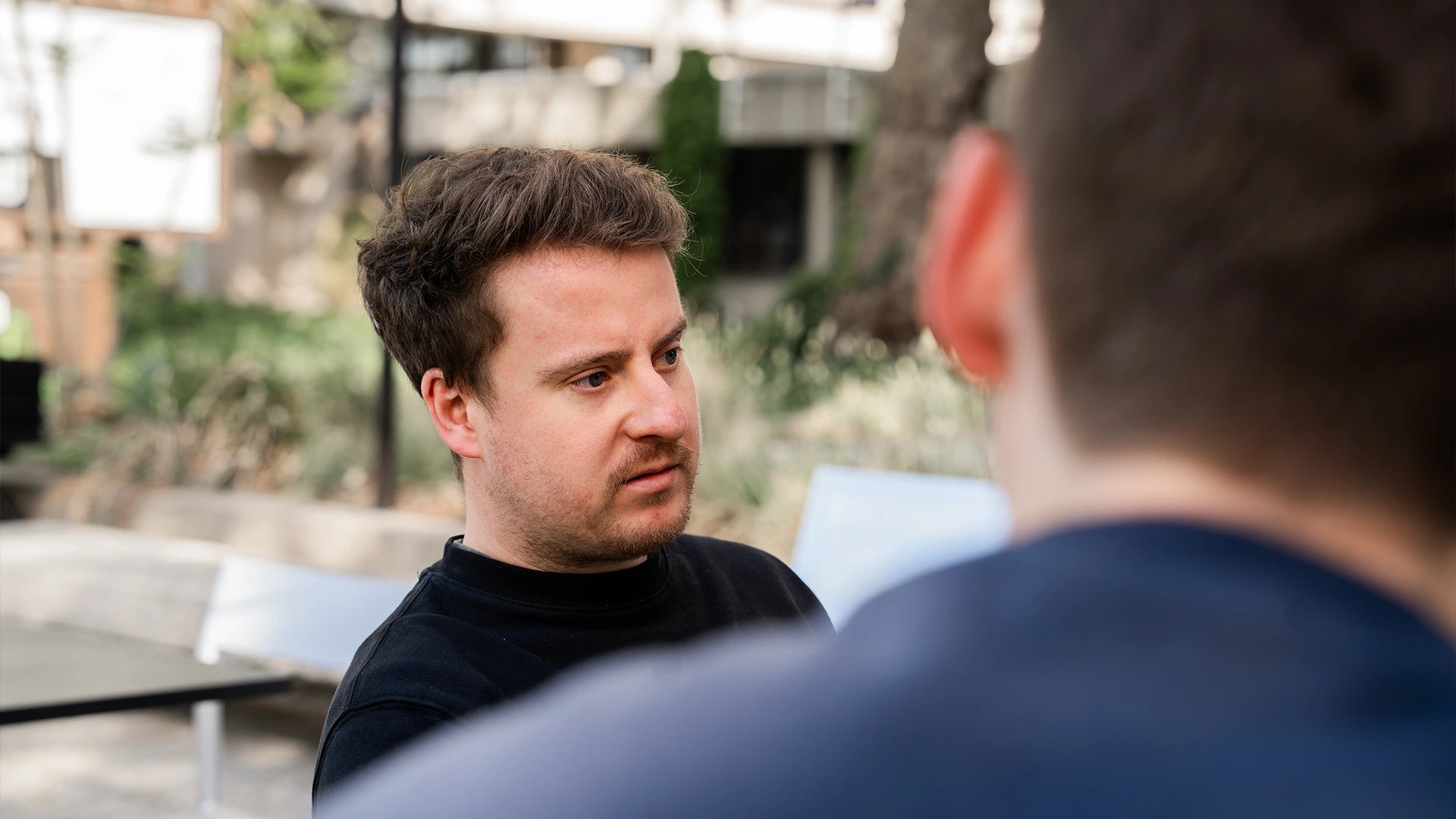
Frederik: “Having the time to do things thoroughly. I missed that in my previous job. There, everything often had to go quickly, which left less room to really tackle problems structurally. At Tricore, you get the time to solve problems properly. It’s nicer when those problems don’t keep coming back, instead of just postponing them.”
Have you encountered any specific challenges in your first few months?
Frederik: “For me personally, the challenge mainly lies in the administration that comes with it. I come from internal IT, where it was mainly important that my hours were full. Now I am working for many clients, and that also involves administration around time tracking. If you have worked for a client, that needs to be kept track of correctly. We used a lot of the same equipment in my previous job. Only at Tricore, it is much more structured. Everything is well documented.”
Glenn: “We have recently switched from WatchGuard to Fortinet. I am now leading that project together with Niels. We are building a standard for all our clients again, so that it is clear for the people in support.
Glenn, how has your role evolved since you started?
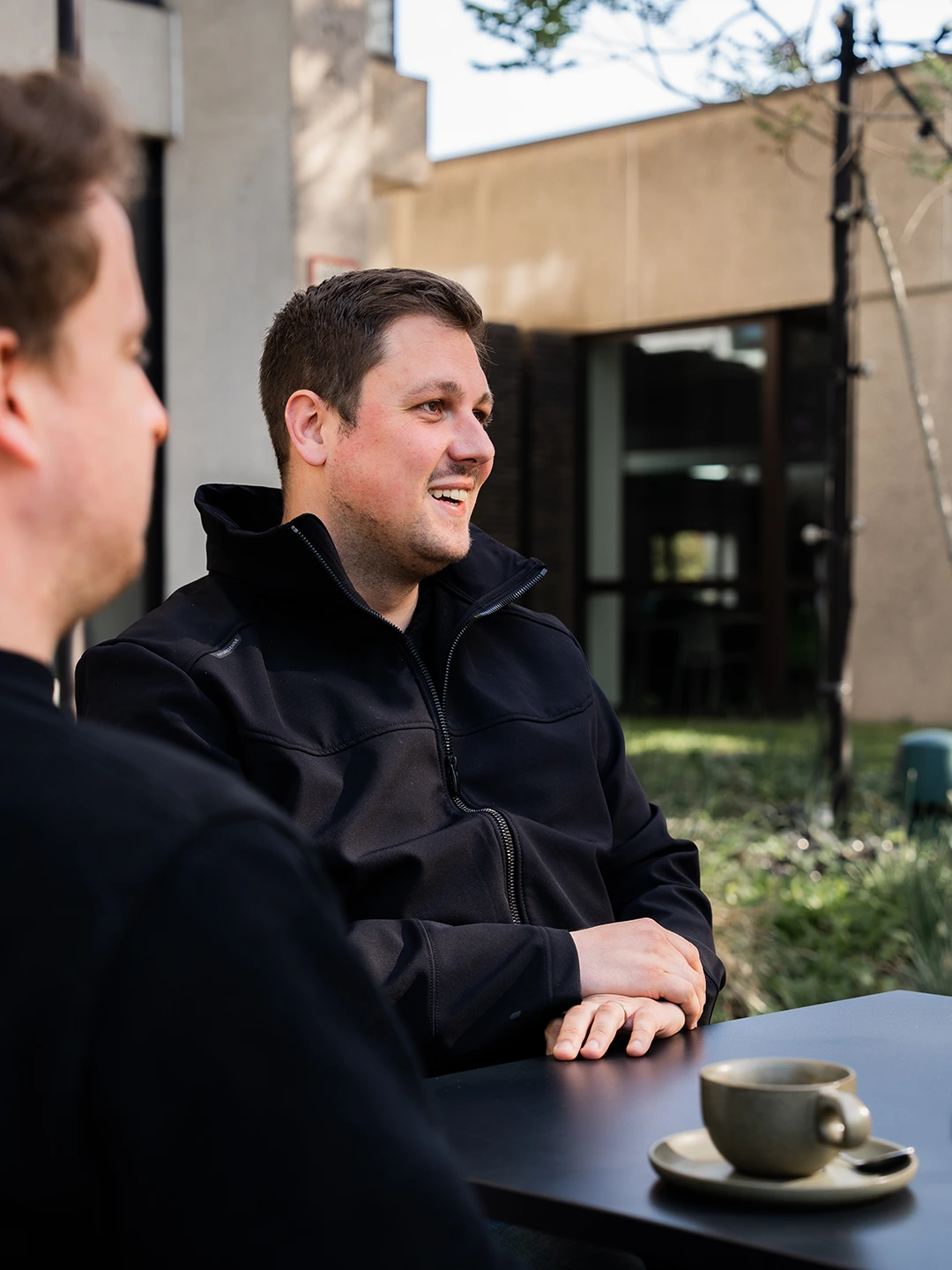
Glenn: “I came in as a generalist to work on projects. Eventually, I became the lead engineer for Group Bruno, a project we are still working on. That was a process where a lot of infrastructure, networking, and project follow-up came together, in which my role has evolved more towards networking. Now I am mainly, although not officially, the lead networking engineer for FortiGate and switching.
I have actually grown quite organically towards networking and have recently also joined the data center team. There, I will mainly take on the networking part.”
What are your ambitions within Tricore?
Glenn: “I would like to further evolve into an architect role. Just like Niels is doing now. Not just executing, but also designing. Thinking about how an IT environment for larger clients is structured. Which choices make sense. How infrastructure, data center, network, and security connect with each other.
With larger clients, you don't wrap up a project in two or three weeks. It can sometimes take several years. Then a whole plan comes into play: how are we going to set everything up, how do we connect that to the data center, how do we further develop it? That seems very interesting to me.”
And Frederik, where do you want to be in a year?
Frederik: “For me, the first year is mainly about technical development. Learning as much as possible in a broad sense. That’s what I enjoy about the job. After that, I’ll start looking to specialize in something. But I’ll let it come to me.
As a System Engineer, you need to have a diverse foundation. You need to be good at problem-solving and be able to switch quickly. When you’re on the phone, you need to be able to jump from one thing to another without forgetting what you were working on before. That brings a lot of variety. In the long term, I definitely see myself growing into a role where I have even more contact with the client. I’m fairly social, so I think that should definitely be part of it.”
What skills do you think are crucial to do your job well?
Glenn: “With us, you have to be a bit of an all-rounder. They do look at who is best at what, but with smaller projects, you often do a lot yourself. Flexibility is important. Sometimes you have to do things after hours, because otherwise, you disrupt a company during the day. And communication plays a crucial role in that. You need to be able to discuss with the client when something can happen.
So, just having technical skills is not enough. You also need to be able to assess what an intervention means for a client. When can something happen? Who needs to be informed? What is the impact if you temporarily interrupt a system? How do you ensure that the client understands why something is necessary? That is where a part of the maturity that Tricore is working towards lies: not just completing tickets, but taking responsibility for the whole.”
“The sector continues to advance. So, you need to stay up-to-date not only as a company but also as a person..”
How would you describe the collaboration within Tricore?
Glenn: “It is very open. You don’t have to create a ticket first. You can just go to someone and ask: can you take a look, because I can’t see it? That works much more efficiently.”
Frederik: “I have only been working here for a few months, but it feels longer. It also feels like I already know everyone quite well. That openness is great. There is always someone available to talk to. That is unique: so much collegiality and at the same time so much expertise.
For someone who is new, that makes a big difference. Especially in a technical environment where you can't possibly know everything right away. The combination of structure, training, and approachable colleagues ensures that someone gets up to speed faster. In the beginning, you receive a lot of training. Everyone who is specialized in something explains a certain tool or way of working. This way, you quickly catch up.
Glenn: “The sector keeps moving forward. Then you need to stay up-to-date not only as a company but also as a person.”
How do you view the balance between a mix of small and large projects?
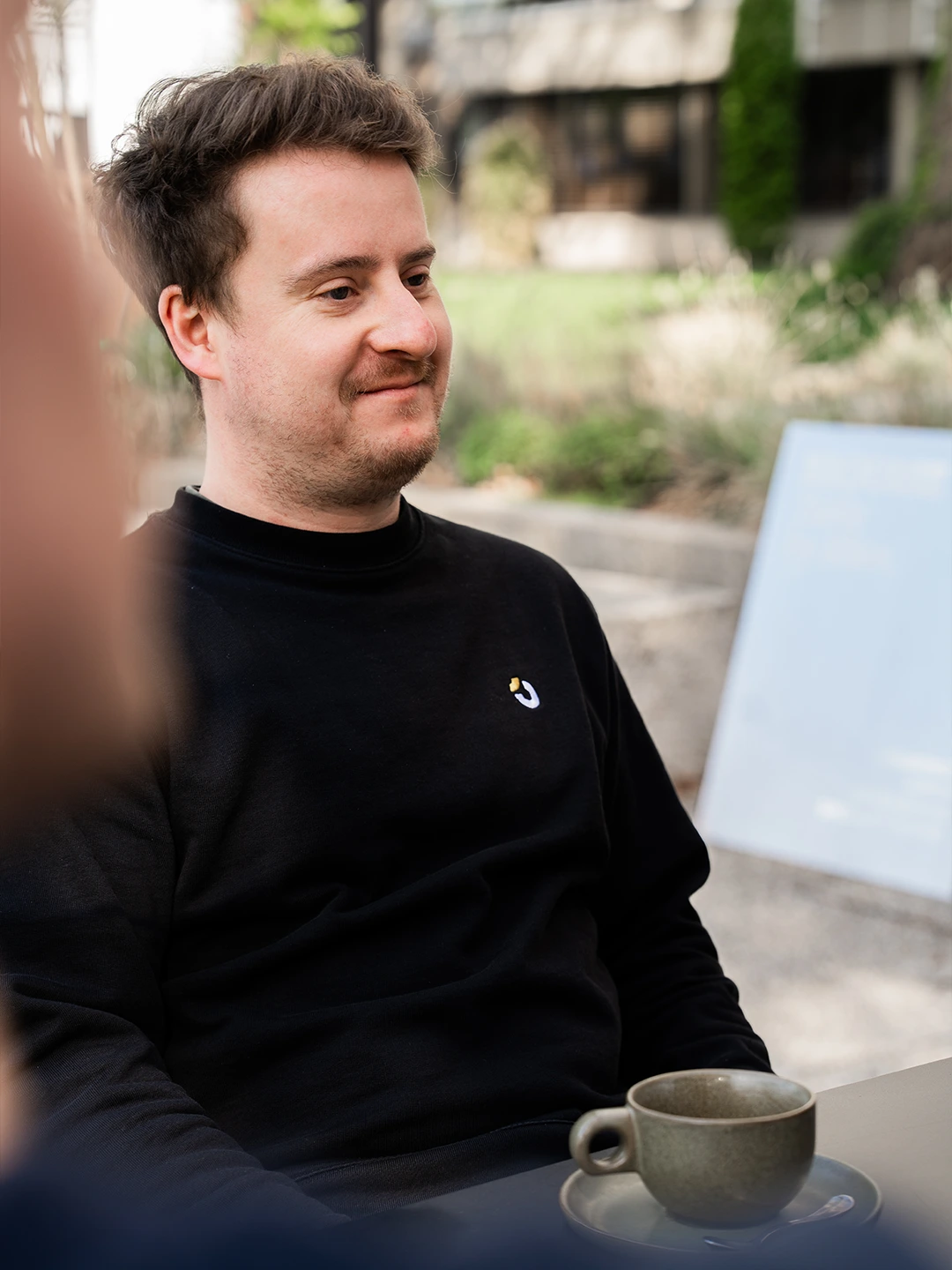
Frederik: “At the moment, I am still fully working at the service desk because I can gain as much knowledge from there as possible. From the operation of Tricore, but also from the operation of clients. In the long term, larger projects can certainly be added, but for now, I mainly want to gain as much knowledge as possible.”
Glenn: “I prefer larger projects now, with the follow-up of one or two smaller projects alongside. This way, you have variety and stay in the loop. If you only do networking, you fall a bit behind on other things. Then something always gets diluted.”
Clear, then I will present you with a few dilemmas to conclude.
Remote work or in the office?
Frederik: “In the office.”
Glenn: “A mix. Sometimes it’s easier to work from home when you’re dealing with something complicated and really need to focus. But I do it about 80/20. Eighty percent in the office, twenty percent at home or with the client. That seems to me the ideal balance.”
Frederik: “The collegiality makes you enjoy going to the office. Especially in the first few months, that is important. Not only to get to know people, but also to pick up the way of working faster. In a team where a lot of knowledge is shared informally, proximity is an advantage.”
Learning new technology or perfecting existing tools?
Glenn: “I am currently working on the integration of Fortinet. That is new and we are fully rolling it out to how we want it.”
Frederik: “I think you need to have a healthy mix there. It’s a fast world, so you have to keep looking at what new tools can bring. But you also shouldn’t jump too quickly. What you have, you should use properly.”
Morning person or night owl?
Frederik: “Naturally a night owl, but now that I have a fixed clock, I notice that I quickly found a rhythm again.”
Glenn: “I can do both. Naturally, I am also a night owl. I usually crawl into bed at 1 AM and wake up at 6:30 AM. Maybe it helps that I have two young children. Plenty of training, so (laughs).”
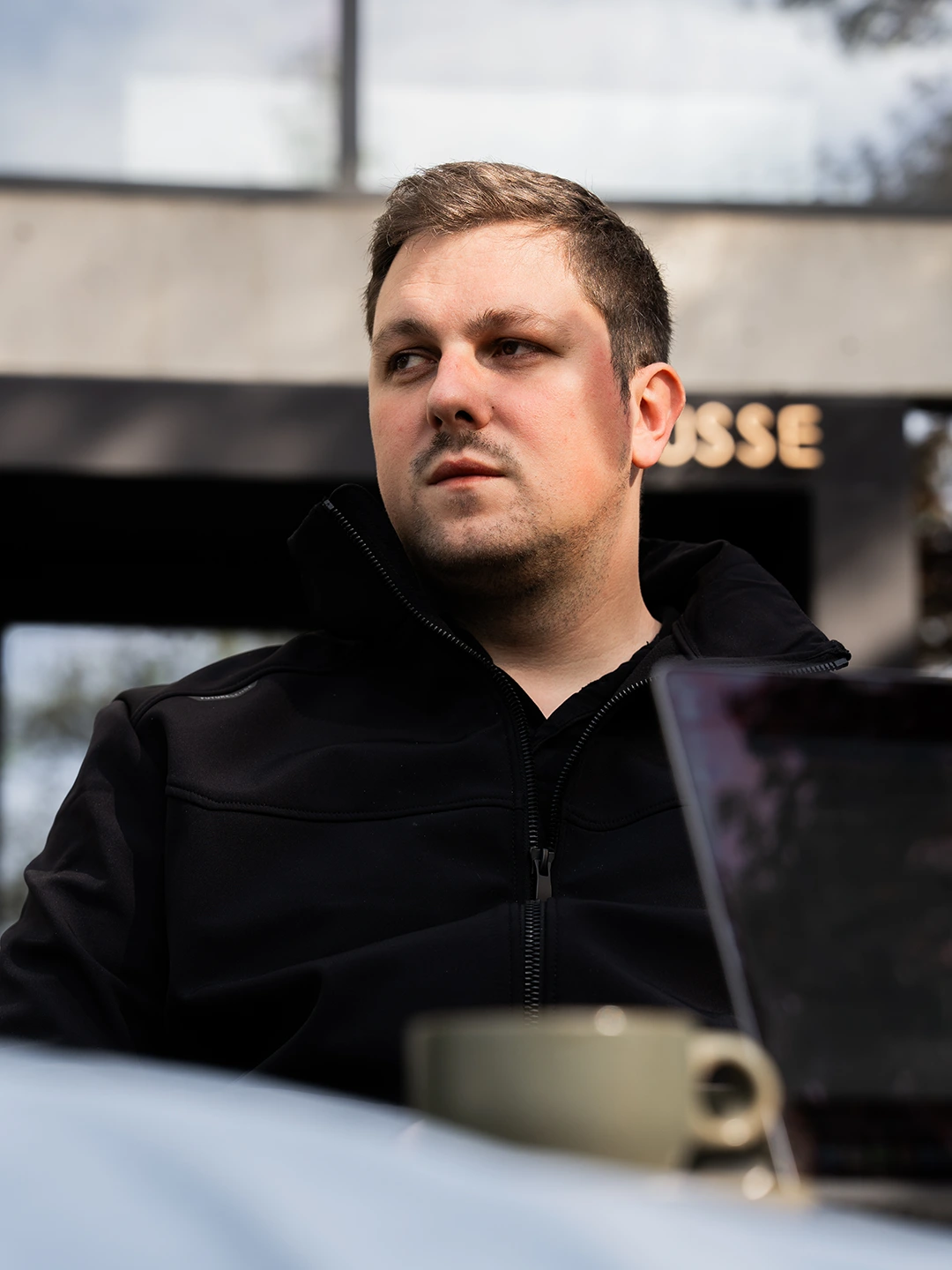
The conversation with Glenn and Frederik nicely summarizes the strength of Tricore. A company where people are not pushed into a fixed box, but can grow based on interest, talent, and responsibility. Where someone who just started immediately feels that there is room to learn. And where someone with almost three years of experience can naturally grow towards larger projects, architecture, and technical specialization.
Not by just letting everything go. But by building standards, while also critically looking at what can be improved. By not only helping customers quickly but thoroughly solving problems so they don’t keep coming back.
Because behind proactive IT, there are always people. People who want to understand how something works. Who dare to learn. Who approach colleagues when they get stuck. And who search every day for the best solution for the customer.
At Tricore, that doesn't seem to be a separate ambition, but just the way of working. Do you recognize yourself in that way of working? And are you looking for an environment where you can grow technically based on your interests? Discover our open vacancies via the button below.