Email security
Protection of communication as the first line of defense. Email remains one of the most used communication channels within organizations, but at the same time also one of the biggest security risks.
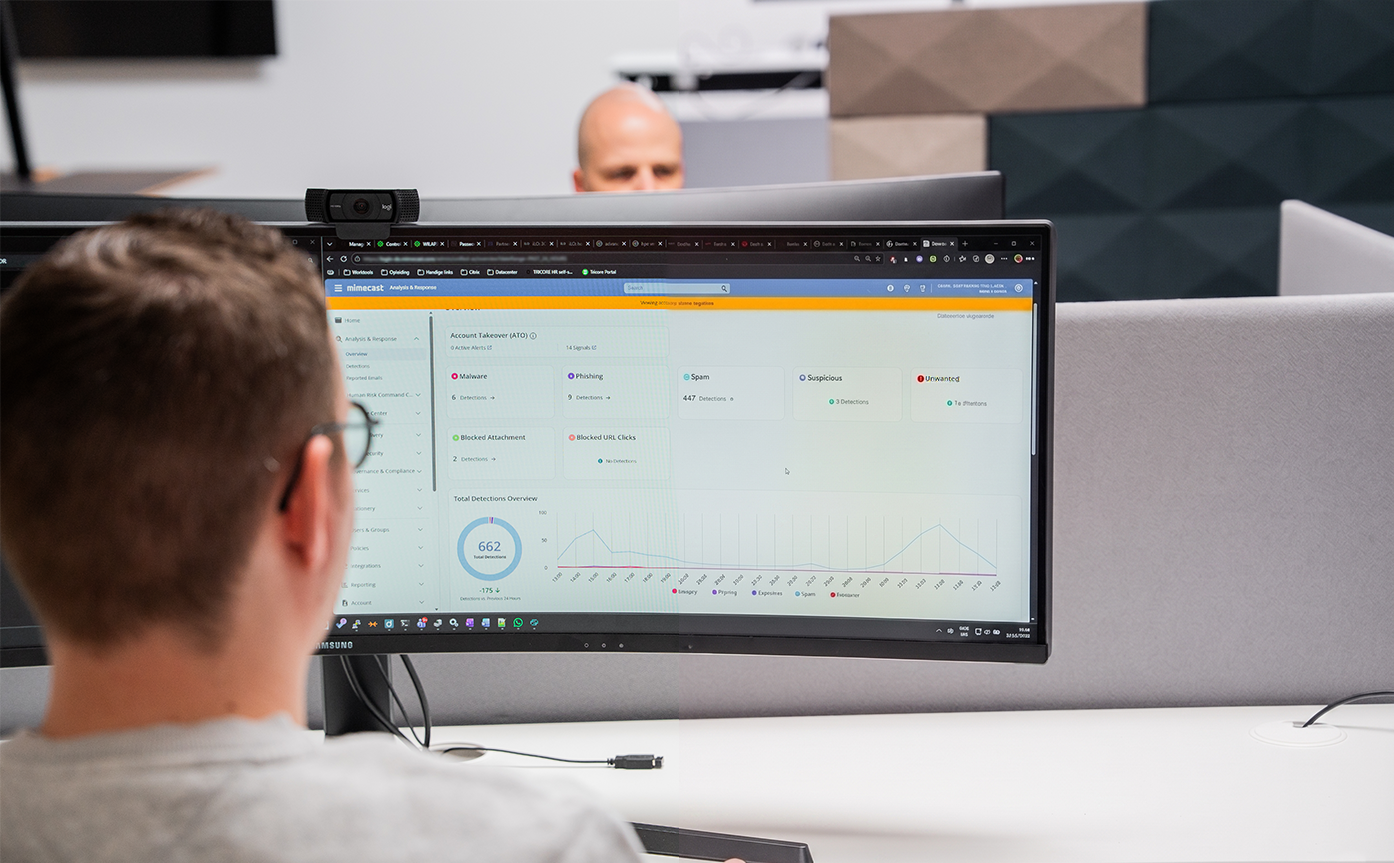
Phishing, malware, fraudulent messages and identity abuse pose a real threat to any organization, regardless of size or sector.
Tricore therefore approaches email security as a critical building block within the overall security strategy, not as an optional addition.
More than spam filtering
Modern email security goes far beyond blocking unwanted messages. We provide a multi-layered security that protects both incoming and outgoing communication.
Our approach focuses on protecting against, among other things:
Phishing and targeted email attacks
Malware and malicious attachments
Abuse of domains and identities
Fraudulent emails and social engineering
Data leaks via email
Layered protection, tailored to risks
Tricore operates with a layered security model where multiple controls work together to mitigate risks.
Depending on the needs of the organization, we provide among other things:
- advanced analysis of email content
- inspection of attachments and links
- protection against impersonation and domain abuse
- controls on outgoing communication
- policies tailored to the organization
Not every organization has the same risks. Therefore, we consciously adjust the security level to context, sector and data sensitivity.
Continuous management and monitoring
Email security is not a static configuration. Threats are constantly evolving.
That’s why Tricore ensures:
1.
Continuous monitoring of security settings
2.
Adjustments based on new threats
3.
Support with
incidents
4.
Alignment with broader security measures
All of this is part of our Security by Design-approach and connects to Tricore Pro-Active.

User-friendly and manageable
Security should not block user operations.
Our email security solutions are designed so that:
Legitimate emails arrive smoothly
Users receive clear feedback
IT maintains overview and control
Management remains central and transparent
This keeps risks limited and the organization operational.

Where this approach makes a difference

Do you want to know how well your organization is currently protected against email-related threats?